The Sacred Thread Ceremony
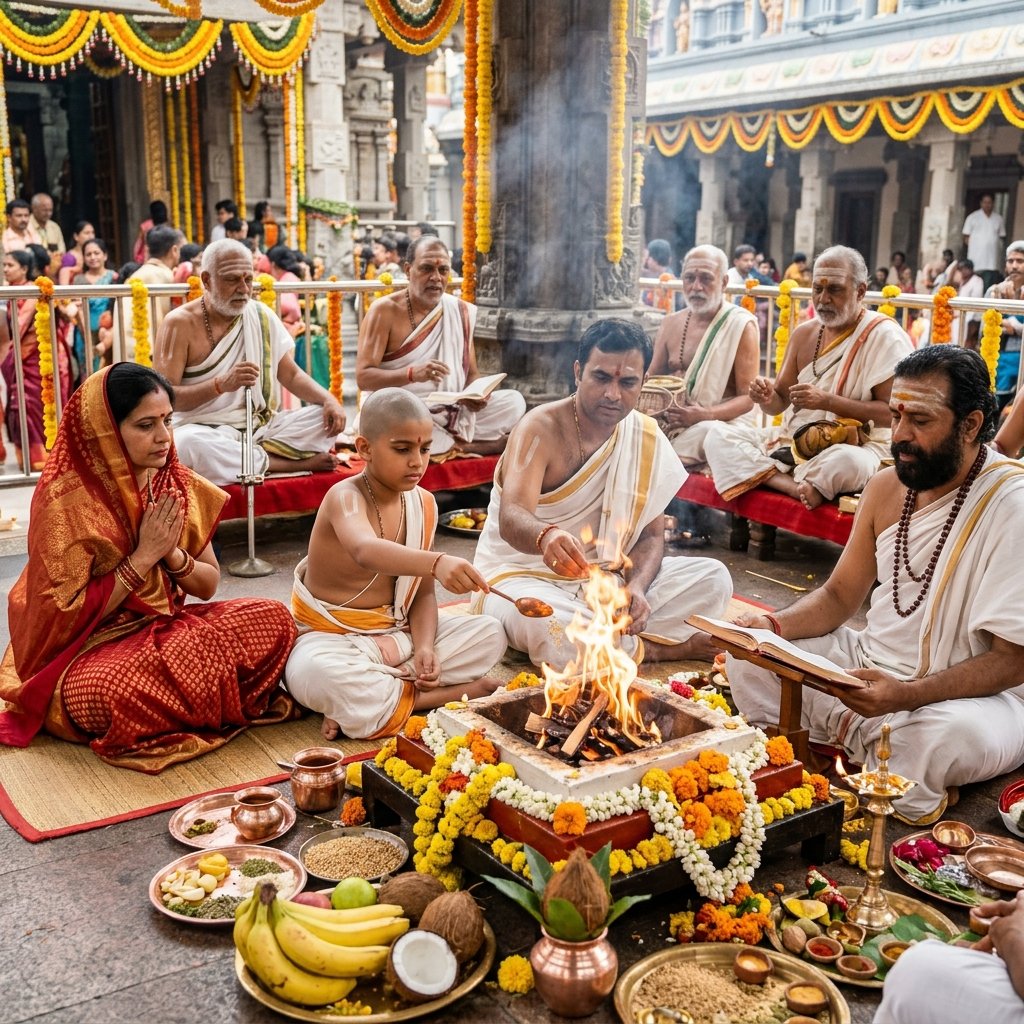
The Upanayana Sanskar (Sacred Thread Ceremony) is the eleventh and one of the most vital of the 16 Vedic Sanskars. 'Upa' means near, and 'Nayana' means leading. It literally translates to "leading the child near the Guru." This ceremony marks the child's formal acceptance by a teacher (Guru) to begin profound Vedic studies, symbolized by the wearing of the sacred thread (Yajnopavita). It represents a 'spiritual rebirth', earning the initiate the title of 'Dvija' (twice-born).
In Sanatan Dharma, physical birth from the mother's womb is the first birth. The second, far more important birth, is the awakening of intellect and spiritual consciousness through the Gayatri Mantra, imparted by the Guru during Upanayana. The sacred thread (Yajnopavita) consists of three strands representing purity of thought, word, and deed, and the three debts (Rinas) to the Gods, Sages, and Ancestors.
The timing historically varied depending on the child's Varna (inclination/profession), but generally occurs during pre-adolescence when the child is ready to absorb serious discipline and knowledge.
The ceremony requires items that symbolize austerity, purity, and readiness for a disciplined life (Brahmacharya).
The boy's head is shaved (leaving the Shikha), and he bathes, dressing in simple garments. During the Havan, the Guru places the sacred thread over the boy's left shoulder, falling to his right hip. The Guru and the boy cover themselves with a cloth, under which the Guru whispers the most powerful Vedic chant—the Gayatri Mantra—into the boy's right ear, igniting his inner intellect:
"O Divine Mother, our hearts are filled with darkness. Please keep this darkness distant from us and promote illumination within us."
Following the initiation, the boy takes a bowl and asks for 'Bhiksha' (alms) from his mother first (saying "Bhavati Bhiksham Dehi"), and then from other relatives. This beautiful tradition instills absolute humility, destroying ego. It teaches the child that society sustains him, and his future knowledge must be used to serve society in return.
A: Resting on the left shoulder and crossing the chest to the right hip connects vital acupressure points related to the heart and digestion. It constantly reminds the wearer to follow the path of righteousness (Dharma).
A: Historically in the Vedic era, both boys and girls underwent Upanayana (girls were called Brahmavadinis). While it became male-centric over centuries, many modern progressive spiritual organizations perform it for girls as well.