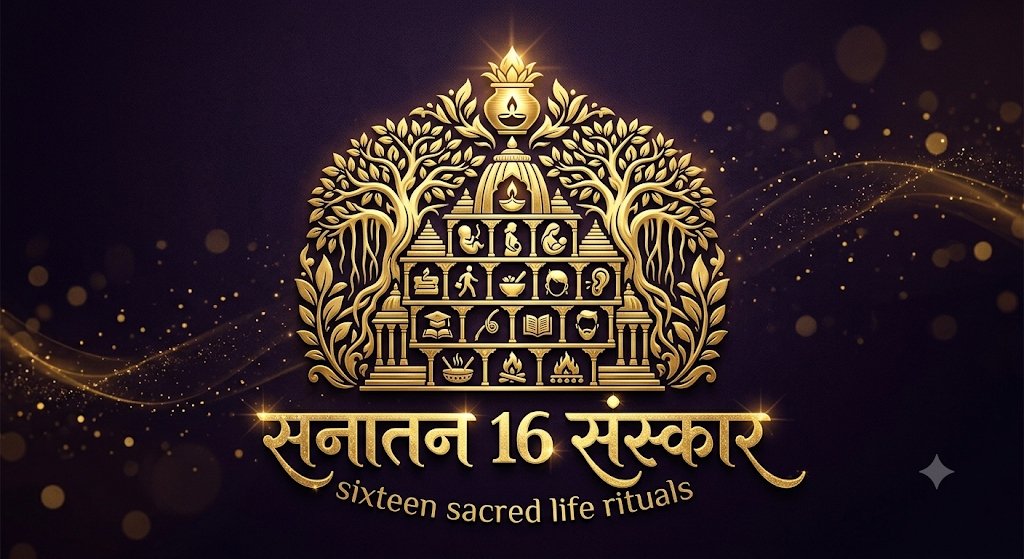
सनातन धर्म के 16 संस्कार
In the Sanatana tradition, Sanskars (Samskaras) are important rites and traditions associated with different stages of human life. They are intended to cultivate values, discipline, responsibility, spiritual awareness, and social harmony.
Different Grihya Sutras and regional traditions may differ in the number, names, and sequence of Sanskars. Sanatan16Sanskar.com presents the following 16 Sanskars as a commonly followed traditional framework.
Garbhadhana Sanskar is traditionally associated with the beginning of family life and conception. It is performed with prayers and the intention of welcoming a child into the family with positive values, responsibility, and spiritual awareness.
Key Focus: Family responsibility, conception, and prayers for a healthy and virtuous child.
Pumsavana Sanskar is a traditional prenatal rite associated with pregnancy. It is performed with prayers and wishes for the well-being of the mother and the developing child.
Key Focus: Maternal well-being, the welfare of the unborn child, and auspicious prayers.
Simantonnayana Sanskar is traditionally performed for a pregnant woman. It expresses blessings and good wishes for the mother and the unborn child and emphasizes family support during pregnancy.
Key Focus: Maternal well-being, protection, blessings, and family support.
Jatakarma Sanskar is associated with the birth of a child. It traditionally welcomes the newborn into the world and includes prayers and blessings for a healthy, long, and meaningful life.
Key Focus: Welcoming the newborn, blessings, and the beginning of life outside the womb.
Namkaran Sanskar is the traditional ceremony of giving a formal name to a newborn. In Sanatana tradition, a name is not merely an identity but may also carry meaning, values, and auspicious significance.
Key Focus: Choosing a meaningful name, auspicious timing, and the naming ceremony.
Nishkramana Sanskar marks the traditional occasion when a baby is taken outside the home for the first time. It symbolizes the child's gradual introduction to the natural and social world.
Key Focus: First outing, introduction to nature, sunlight, and blessings for the child.
Annaprashana Sanskar marks the traditional occasion when a baby is introduced to solid food for the first time. It represents an important transition in the child's development and is accompanied by prayers for health and nourishment.
Key Focus: First food, nourishment, health, and the child's growth.
Chudakarana, commonly known as Mundan Sanskar, is the traditional ceremony of removing a child's first hair. It has been associated with purification, a new stage of childhood, and auspicious beginnings.
Key Focus: First hair removal, traditional purification, and blessings for the child.
Karnavedha Sanskar is the traditional ceremony of ear piercing. It has held religious, cultural, and social significance in different Hindu communities, with variations in customs and timing across regions.
Key Focus: Ear piercing, traditional customs, timing, and cultural significance.
Vidyarambha Sanskar marks the traditional beginning of a child's formal learning. The child may be introduced to letters, writing, or basic knowledge in the presence of parents, teachers, or a spiritual guide.
Key Focus: Beginning of education, learning, knowledge, and respect for the teacher.
Upanayana Sanskar is one of the important traditional rites associated with entering the disciplined life of learning under a teacher. The ceremony traditionally includes the wearing of the Yajnopavita (sacred thread) and instruction in the Gayatri Mantra.
Key Focus: Guru-Shishya tradition, disciplined learning, Brahmacharya, and spiritual study.
Vedarambha Sanskar is associated with the formal beginning of the study of the Vedas. It represents the student's entry into deeper learning, self-study, discipline, and the traditional Guru-Shishya educational system.
Key Focus: Vedic learning, self-study, discipline, and knowledge.
Keshanta Sanskar is traditionally associated with a significant transition in a student's life. It marks a stage of growing maturity and is connected with discipline, self-control, education, and preparation for greater responsibilities.
Key Focus: Maturity, discipline, self-control, and personal responsibility.
Samavartana Sanskar traditionally marks the completion of formal education and the student's return from the teacher's household or period of disciplined study. It symbolizes the transition from student life toward social and family responsibilities.
Key Focus: Completion of education, Guru's blessings, and entry into responsible social life.
Vivaha Sanskar is one of the most significant Sanskars in the Sanatana tradition. It represents the union of two individuals and the establishment of shared family, social, and spiritual responsibilities. Traditional Hindu marriage ceremonies may include sacred fire, Vedic mantras, Saptapadi (seven steps), vows, and blessings.
Key Focus: Marriage, Dharma, family life, Saptapadi, mutual responsibilities, and sacred vows.
Antyeshti Sanskar refers to the traditional last rites performed after death. It provides a framework for paying final respects to the deceased and for the family to fulfill traditional religious and social responsibilities during a time of bereavement.
Key Focus: Final rites, farewell, remembrance, family responsibilities, and traditional funeral practices.
Garbhadhana → Pumsavana → Simantonnayana → Jatakarma → Namkaran → Nishkramana → Annaprashana → Chudakarana → Karnavedha → Vidyarambha → Upanayana → Vedarambha → Keshanta → Samavartana → Vivaha → Antyeshti
Together, these Sanskars can be understood as a traditional framework that accompanies a person through important stages of life—from conception and birth to education, family life, and the final rites.
They are not merely ceremonies; they represent ideals of Dharma, responsibility, learning, family, discipline, social values, and spiritual awareness.
हिंदू सनातन परंपरा में संस्कार मनुष्य के जीवन को शारीरिक, मानसिक, सामाजिक और आध्यात्मिक रूप से संस्कारित करने वाली महत्वपूर्ण परंपराएँ हैं। विभिन्न गृह्यसूत्रों और परंपराओं में संस्कारों की संख्या तथा नामों में कुछ भिन्नता मिलती है। Sanatan16Sanskar.com पर प्रचलित षोडश संस्कार परंपरा के आधार पर इनका परिचय इस प्रकार है।
गर्भाधान संस्कार को जीवन की शुरुआत से संबंधित संस्कार माना जाता है। इसका उद्देश्य दांपत्य जीवन को धर्मसम्मत एवं उत्तरदायित्वपूर्ण रूप से आगे बढ़ाने तथा श्रेष्ठ संतति की कामना से जुड़ा है। वैदिक एवं गृह्यसूत्र परंपरा में संतानोत्पत्ति से संबंधित विभिन्न विधियों का वर्णन मिलता है।
मुख्य विषय: संतान की मंगलकामना, दांपत्य धर्म और शास्त्रीय विधि।
पुंसवन संस्कार गर्भावस्था से संबंधित संस्कार है। पारंपरिक रूप से इसे गर्भस्थ शिशु के कल्याण, स्वस्थ विकास और शुभकामना से जोड़ा गया है। इसके विभिन्न रूप और समय अलग-अलग शास्त्रीय परंपराओं में मिलते हैं।
मुख्य विषय: गर्भस्थ शिशु का मंगल, मातृ-कल्याण और वैदिक प्रार्थना।
सीमन्तोन्नयन संस्कार गर्भवती माता के लिए किया जाने वाला संस्कार है। इसका उद्देश्य माता और गर्भस्थ शिशु के कल्याण की मंगलकामना करना तथा गर्भावस्था को शुभ एवं सुरक्षित मानने की पारंपरिक भावना को व्यक्त करना है।
मुख्य विषय: मातृ-कल्याण, गर्भस्थ शिशु की मंगलकामना और पारिवारिक आशीर्वाद।
शिशु के जन्म के बाद किया जाने वाला संस्कार जातकर्म कहलाता है। यह नवजात शिशु के पृथ्वी पर आगमन का स्वागत और उसके स्वस्थ, दीर्घ एवं मंगलमय जीवन की कामना से संबंधित है। गृह्यसूत्र परंपरा में जातकर्म की विभिन्न विधियों का उल्लेख मिलता है।
मुख्य विषय: जन्म का स्वागत, मंगलकामना और शिशु के प्रति आशीर्वाद।
जन्म के बाद शिशु को औपचारिक रूप से नाम प्रदान करने की परंपरा को नामकरण संस्कार कहा जाता है। नाम को व्यक्ति की सामाजिक पहचान से जोड़ने के साथ-साथ भारतीय परंपरा में उसके अर्थ और शुभता को भी महत्व दिया गया है।
मुख्य विषय: नाम का चयन, नाम का अर्थ, शुभ समय और पारंपरिक विधि।
जब शिशु को पहली बार घर से बाहर प्राकृतिक वातावरण में ले जाने की परंपरा निभाई जाती है, उसे निष्क्रमण संस्कार कहा जाता है। इसका संबंध शिशु के बाहरी संसार से परिचय और उसके मंगलमय जीवन की कामना से है।
मुख्य विषय: प्रकृति से परिचय, सूर्य-दर्शन और शिशु के कल्याण की कामना।
शिशु को पहली बार अन्न ग्रहण कराने की परंपरा अन्नप्राशन संस्कार कहलाती है। यह शिशु के जीवन में दूध के अतिरिक्त अन्न ग्रहण करने की महत्वपूर्ण अवस्था का सांस्कृतिक और धार्मिक रूप से स्वागत करता है।
मुख्य विषय: प्रथम अन्न, स्वास्थ्य की मंगलकामना और पोषण की शुरुआत।
बालक के प्रथम केशों को उतारने की परंपरा को चूड़ाकर्म या मुंडन संस्कार कहा जाता है। इसे शिशु के प्रारंभिक जीवन से आगे बढ़ने और शारीरिक-सांस्कृतिक शुद्धि की पारंपरिक भावना से जोड़ा जाता है।
मुख्य विषय: प्रथम केश-वपन, शुभकामना और पारंपरिक विधि।
बालक या बालिका के कान छेदन की परंपरा को कर्णवेध संस्कार कहा जाता है। भारतीय परंपरा में इसे धार्मिक, सांस्कृतिक और सामाजिक महत्व प्राप्त रहा है। विभिन्न क्षेत्रों और परंपराओं में इसकी विधि अलग हो सकती है।
मुख्य विषय: कर्णवेध की परंपरा, समय, विधि और सांस्कृतिक महत्व।
बालक को औपचारिक रूप से शिक्षा के प्रारंभिक चरण में प्रवेश कराने की परंपरा विद्यारंभ संस्कार कहलाती है। इसमें अक्षर-ज्ञान अथवा लेखन की शुरुआत को शुभ माना जाता है और ज्ञान की देवी सरस्वती तथा गुरु के प्रति सम्मान व्यक्त किया जाता है।
मुख्य विषय: अक्षर-ज्ञान, शिक्षा का प्रारंभ और गुरु-ज्ञान परंपरा।
उपनयन संस्कार भारतीय संस्कार परंपरा के महत्वपूर्ण संस्कारों में से एक है। परंपरागत रूप से इसे बालक के आचार्य के सान्निध्य में ब्रह्मचर्य एवं अध्ययन के जीवन में प्रवेश से जोड़ा गया है। यज्ञोपवीत धारण और गायत्री मंत्रोपदेश इसकी प्रमुख परंपराओं में शामिल हैं।
मुख्य विषय: गुरु-शिष्य परंपरा, ब्रह्मचर्य, अध्ययन और गायत्री उपासना।
वेदारंभ संस्कार वेदाध्ययन के औपचारिक आरंभ से संबंधित संस्कार है। इसका उद्देश्य विद्यार्थी को वैदिक ज्ञान, स्वाध्याय और गुरु-शिष्य परंपरा के माध्यम से शिक्षा की ओर अग्रसर करना है।
मुख्य विषय: वेदाध्ययन, स्वाध्याय, गुरु और ज्ञान परंपरा।
केशांत संस्कार विद्यार्थी के जीवन में एक महत्वपूर्ण परिवर्तन का संस्कार माना जाता है। पारंपरिक रूप से यह किशोरावस्था से आगे बढ़ने और संयम, अनुशासन तथा अध्ययनशील जीवन की भावना से जुड़ा रहा है।
मुख्य विषय: जीवन का संक्रमणकाल, संयम, अनुशासन और अध्ययन।
गुरुकुल या औपचारिक अध्ययन की अवधि पूर्ण होने पर विद्यार्थी के गृहस्थ जीवन की ओर लौटने से संबंधित संस्कार को समावर्तन संस्कार कहा जाता है। यह शिक्षा की पूर्णता और सामाजिक उत्तरदायित्वों की ओर प्रवेश का प्रतीक माना जाता है।
मुख्य विषय: शिक्षा की पूर्णता, गुरु का आशीर्वाद और सामाजिक जीवन में प्रवेश।
विवाह संस्कार सनातन परंपरा में अत्यंत महत्वपूर्ण संस्कार है। यह दो व्यक्तियों के साथ-साथ दो परिवारों के सामाजिक एवं धार्मिक संबंध का भी प्रतीक है। विवाह में अग्नि, मंत्र, सप्तपदी और पारस्परिक उत्तरदायित्वों को विशेष महत्व दिया जाता है।
मुख्य विषय: दांपत्य धर्म, सप्तपदी, अग्नि-साक्षी, परिवार और सामाजिक उत्तरदायित्व।
जीवन की अंतिम अवस्था में शरीर के प्रति किए जाने वाले पारंपरिक संस्कार को अंत्येष्टि संस्कार कहा जाता है। इसका उद्देश्य दिवंगत व्यक्ति के प्रति अंतिम सम्मान व्यक्त करना तथा परिवार द्वारा शोक और धार्मिक कर्तव्यों को परंपरा के अनुसार पूरा करना है।
मुख्य विषय: अंतिम संस्कार, पितृ-संबंधी परंपराएँ, श्रद्धांजलि और परिवार के धार्मिक कर्तव्य।
गर्भाधान → पुंसवन → सीमन्तोन्नयन → जातकर्म → नामकरण → निष्क्रमण → अन्नप्राशन → चूड़ाकर्म → कर्णवेध → विद्यारंभ → उपनयन → वेदारंभ → केशांत → समावर्तन → विवाह → अंत्येष्टि
इन संस्कारों को केवल धार्मिक अनुष्ठान के रूप में नहीं, बल्कि मनुष्य के जीवन के विभिन्न चरणों को संस्कारित, अनुशासित और सामाजिक रूप से स्वीकार करने वाली परंपरा के रूप में भी समझा जा सकता है।