The Vedic Baby Shower for the Mother's Well-being
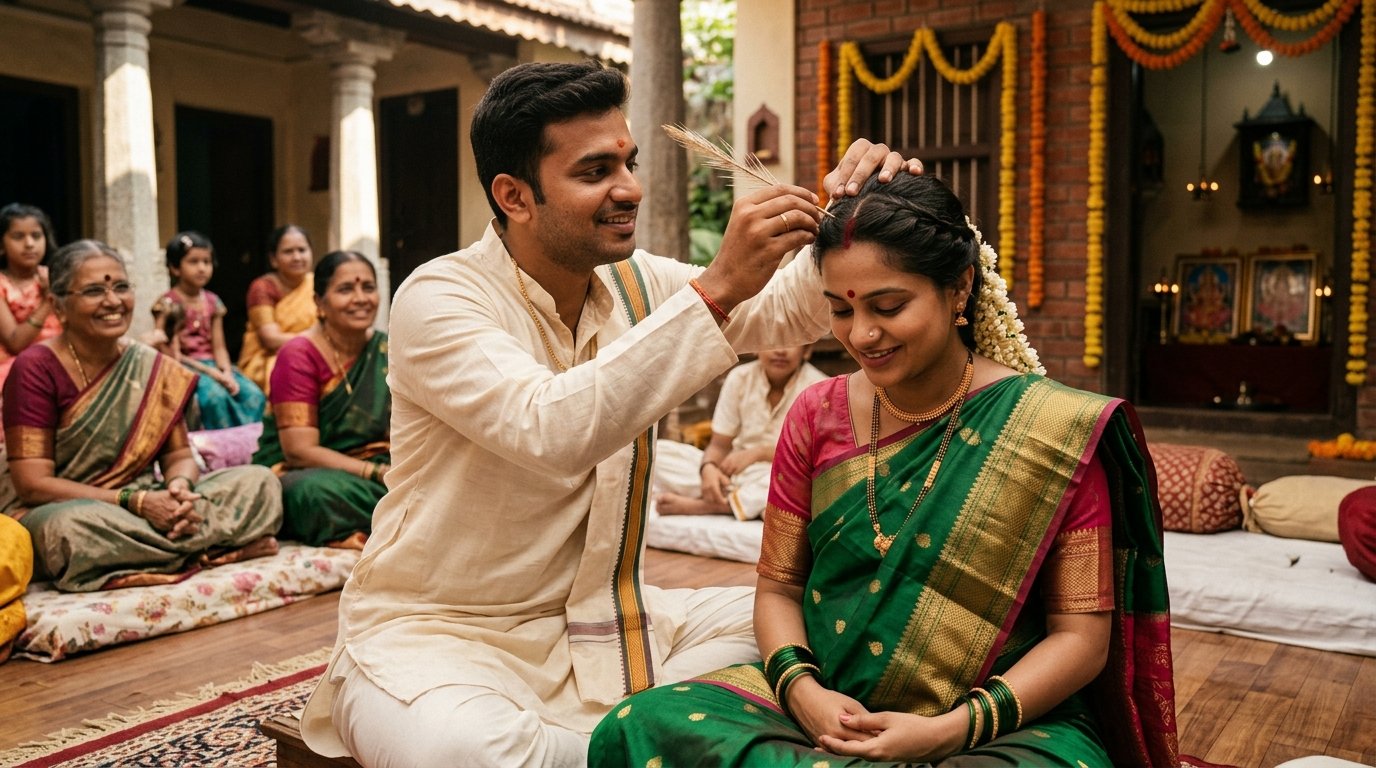
The Simantonnayana Sanskar (Vedic Baby Shower) is the third of the 16 Vedic sacraments. The word 'Simanta' means the parting of the hair, and 'Unnayana' means raising or uplifting. This beautiful ritual is performed during the 6th or 8th month of pregnancy to uplift the mother's spirits, protect the womb from negative energies, and ensure a safe and smooth delivery.
As pregnancy advances, the physical and emotional burden on the mother increases. The ancient sages designed this Sanskar to keep the mother cheerful (Prasanna) and to satisfy her cravings (Dohada), as unfulfilled desires can negatively impact the psychological development of the child.
It is usually performed when the fetal brain is rapidly developing, and the child begins to hear and learn from the external environment.
This is a festive occasion requiring both spiritual items and gifts for the mother:
The mother-to-be dresses in new garments and sits near the Havan. The husband gently parts her hair upwards three times, from the forehead to the crown, using a quill or Udumbara branch, symbolizing the upward flow of positive energy (Kundalini) and the opening of the mind. The following mantra is chanted:
"I invoke Goddess Raka (Goddess of full moon & fertility) with beautiful hymns. May she hear us, bless this mother, and bestow a brave, long-lived child, sewing the bodily parts of the child flawlessly."
In modern Indian culture, this Sanskar is celebrated as 'God Bharai'. Elder women of the family sing traditional folk songs, bless the mother, and fill her lap (God) with fruits, sweets, and gifts. The mother is advised to read inspiring texts like the Ramayana or Gita, as the child is now fully capable of hearing and absorbing knowledge (like Abhimanyu in the Mahabharata).
A: Parting the hair upwards physically stimulates the 'Sahasrara Chakra' (crown chakra) of the mother, promoting calmness and reducing anxiety related to the upcoming childbirth.
A: Yes. If Pumsavana was missed in the third month, many families combine both rituals during the 6th or 8th month under the guidance of an Acharya.