The Final Rites and Cremation
The Antyeshti Sanskar (Final Rites / Cremation) is the sixteenth and final sacrament in the journey of a Hindu life. 'Antya' means final, and 'Ishti' means sacrifice. It is the last fire sacrifice (Yajna) performed for an individual, where the physical body itself is offered back to the sacred fire (Agni). It marks the release of the immortal soul (Atman) from the mortal body, allowing it to continue its cosmic journey.
In Sanatan Dharma, death is not an absolute end, but a transition. The physical body is made of the 'Pancha Mahabhutas' (Five Elements): Earth, Water, Fire, Air, and Space. Cremation rapidly breaks down the body so these elements can return to their universal sources. Simultaneously, it severs the soul's attachment to its former physical form, freeing it from the cycle of suffering (Preta) to ascend to the realm of ancestors (Pitri Loka) or attain liberation (Moksha).
Unlike other Sanskars, Antyeshti requires no auspicious Muhurat. It must be performed as swiftly as possible out of respect for the departed soul.
The Samagri ensures absolute purity and helps the fire burn thoroughly.
The body is bathed, dressed in fresh cloth, and carried on a bamboo bier (Arthi) to the cremation ground (Shmashana). The chief mourner (usually the eldest son) leads the procession chanting "Ram Naam Satya Hai". After circumambulating the pyre, the chief mourner lights the fire (Mukhagni). The priest chants mantras instructing Agni (Fire) not to consume the soul, but to carry it to the heavens:
"O Agni, do not burn this departed soul entirely; do not scorch him. Do not tear his skin or his body. When you have matured him (purified the elements), O Jatavedas, send him to the realm of the ancestors."
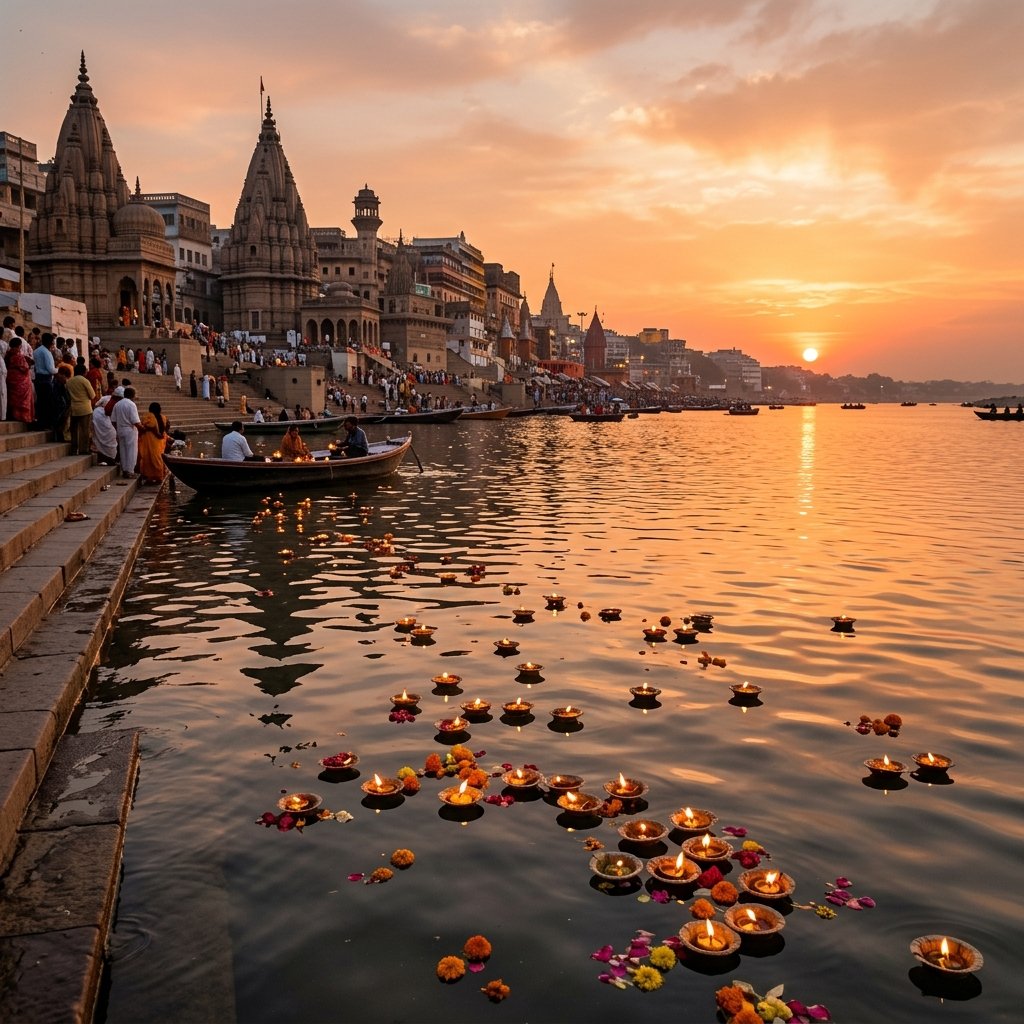
When the skull is exposed to the fire, the chief mourner lightly taps it with a bamboo stick (Kapal Kriya). This releases the Prana (life force) trapped in the Brahmarandhra (crown chakra), freeing the soul completely. After the cremation, the remaining bones and ashes (Asthi) are collected and later immersed in a sacred river, like the Ganges in Kashi, to ensure ultimate salvation (Moksha).
A: Cremation ensures swift detachment of the soul from its former body. A buried body decays slowly, which can cause the soul to linger around the corpse due to lingering attachments.
A: Yes. Infants, young children, pregnant women, and great saints (Sanyasis) are traditionally given Jal Samadhi (immersion in a river) or Bhumi Samadhi (burial), as their bodies are already considered pure.