The Sacred Ritual of Conception
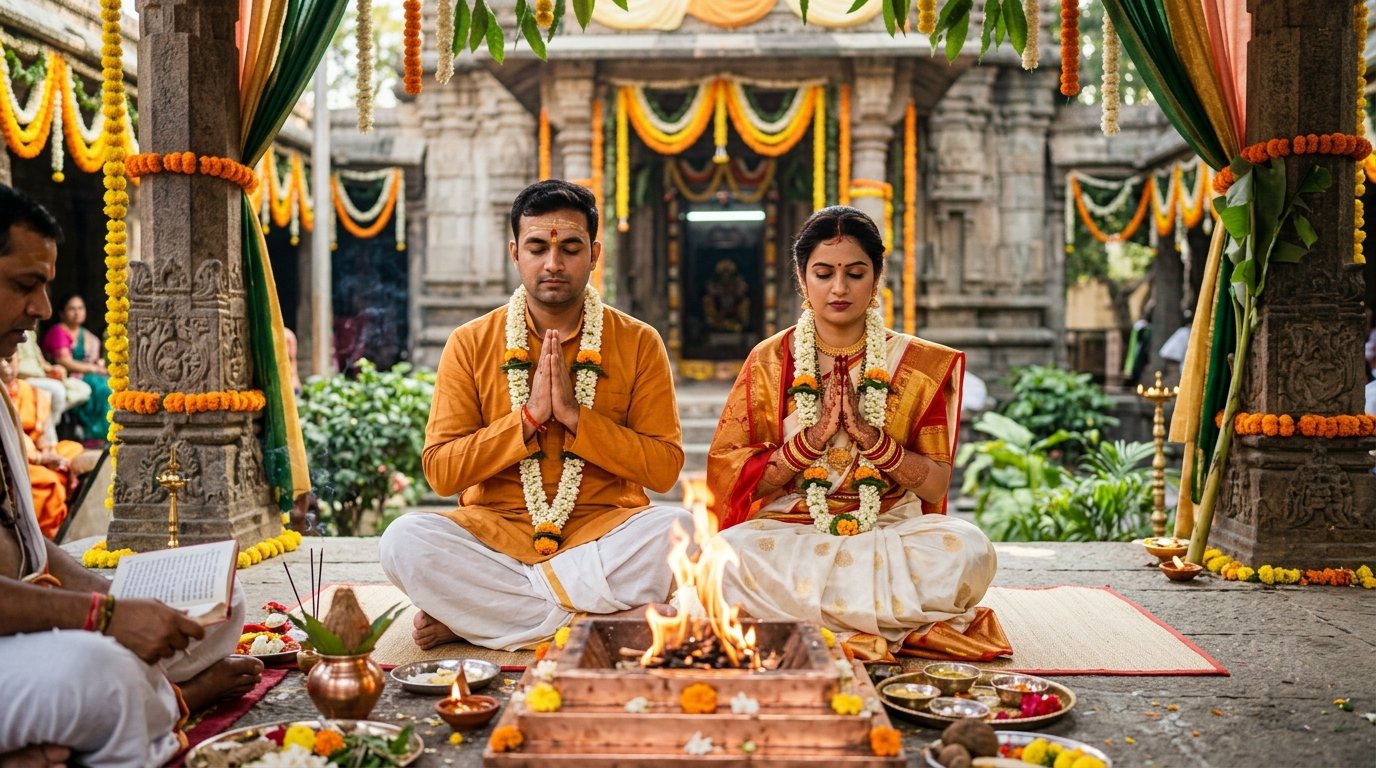
The Garbhadhana Sanskar (Conception Sacrament) is the very first of the 16 Vedic Sanskars. The word 'Garbha' means womb, and 'Dhana' means placing or establishing. This sacred rite is performed by a married couple to invite a noble, divine, and spiritually evolved soul into the womb. It transforms the biological act of procreation into a highly spiritual and conscious prayer.
According to Ayurveda and Vedic astrology, the physical, mental, and spiritual health of a child is heavily influenced by the state of mind and cosmic alignment at the exact moment of conception.
The time of conception is not left to chance in Sanatan Dharma. The Muhurat is carefully calculated to avoid inauspicious planetary hours (Rahu Kaal, Eclipse, etc.).
Before the union, a brief purification puja is performed. The required Samagri includes:
The couple fasts or eats Sattvic food during the day. In the evening, after a purifying bath, they perform a small Havan invoking Prajapati (the Lord of Creation). The husband recites the following Vedic prayer to invoke divine energy into the womb:
"O Goddess Sinivali and Goddess Saraswati, bestow upon us a child. O Ashwini Kumars, adorned with lotus garlands, please establish the embryo safely."
The process actually begins months before conception. According to Ayurveda, both parents undergo Shodhana (detoxification). They consume a Sattvic diet rich in milk, ghee, and herbs like Ashwagandha (for men) and Shatavari (for women) to purify the reproductive tissues (Shukra Dhatu).
A: While the actual union is strictly private, families often invite an Acharya earlier in the day to perform the preliminary Havan and calculate the exact Muhurat.
A: Garbhadhana is the specific ritual of conception. Garbha Sanskar is the broader process of educating and nurturing the child while in the womb through mantras and music.