The First Shave of Adulthood
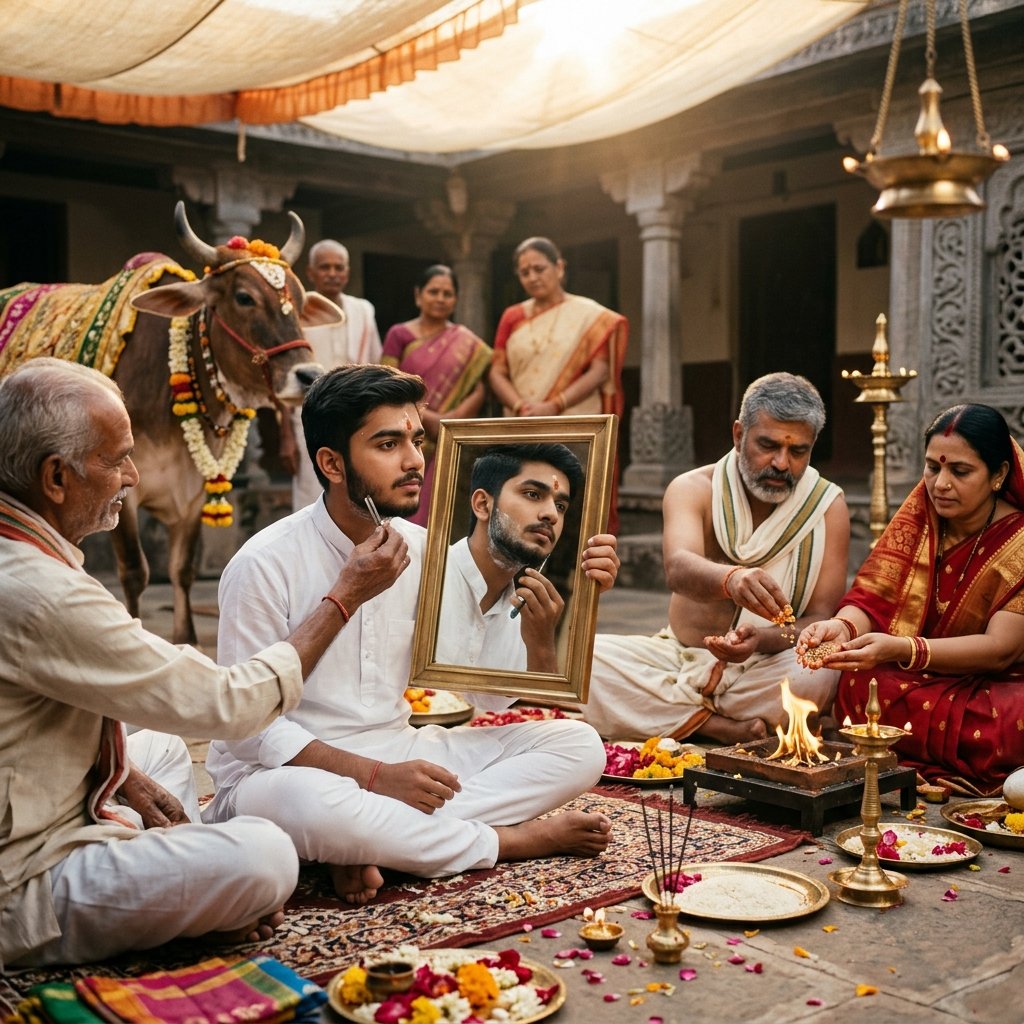
The Keshanta Sanskar (First Shave / Coming of Age Sacrament) is the thirteenth of the 16 Vedic Sanskars. 'Kesha' means hair, and 'Anta' means end. Also known as Godan (the gift of a cow), this ceremony marks the first time a youth shaves his facial hair (beard/mustache). It is the Vedic 'coming-of-age' ceremony, signifying the end of boyhood and the awakening of adult responsibilities and youthfulness.
Puberty brings immense physical, hormonal, and psychological changes. The ancient sages designed Keshanta to acknowledge these changes in a sacred, controlled environment. Instead of youth becoming arrogant or distracted by their newfound physical maturity, this ritual channels their energy into discipline. The youth renews his vows of Brahmacharya (celibacy and focus) until his studies are fully complete.
The ceremony is aligned with the natural onset of puberty and facial hair growth.
The Samagri is very similar to the Chudakarana (Mundan) ceremony, but with a focus on adult responsibilities.
The youth sits before the sacrificial fire. The barber shaves his facial hair while the Guru chants hymns of purity and maturity. The youth takes a vow of silence (Mauna Vrata) for a day to internalize his transition. Most importantly, he gifts a cow (Godan) to his Guru as an expression of immense gratitude for the knowledge received thus far.
"Make me glorious. Make me a master of food and sustainer of others (taking on adult responsibilities)."
This Sanskar provides a profound psychological anchor for a teenager. Instead of facing the confusing turbulence of puberty alone, society recognizes their maturity through a sacred event. It builds self-respect, accountability, and emotional stability, ensuring the youth understands that physical maturity must be paired with intellectual and spiritual maturity.
A: 'Go' means cow, and 'Dan' means gift. Historically, the student gifted a cow to his Guru during this ceremony to sustain the Guru's family and the Gurukulam. Today, this is done symbolically through monetary Dakshina.
A: While less common as an independent grand event today, many traditional families merge the Godan/Keshanta rituals with the Upanayana or just before marriage (Vivah) to fulfill the Shastric requirements.